
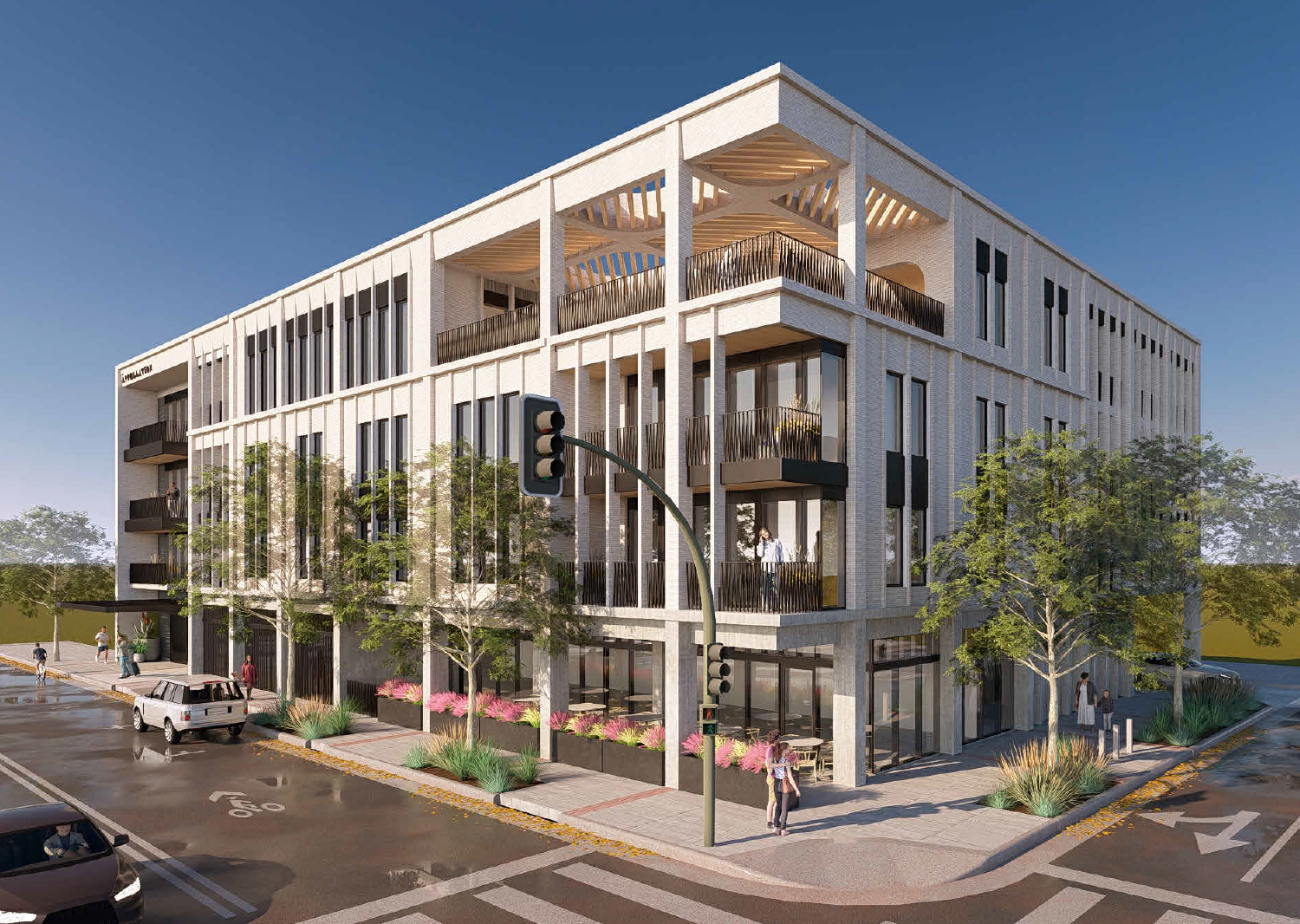
Appellation Petaluma Hotel
Revised Design Overview
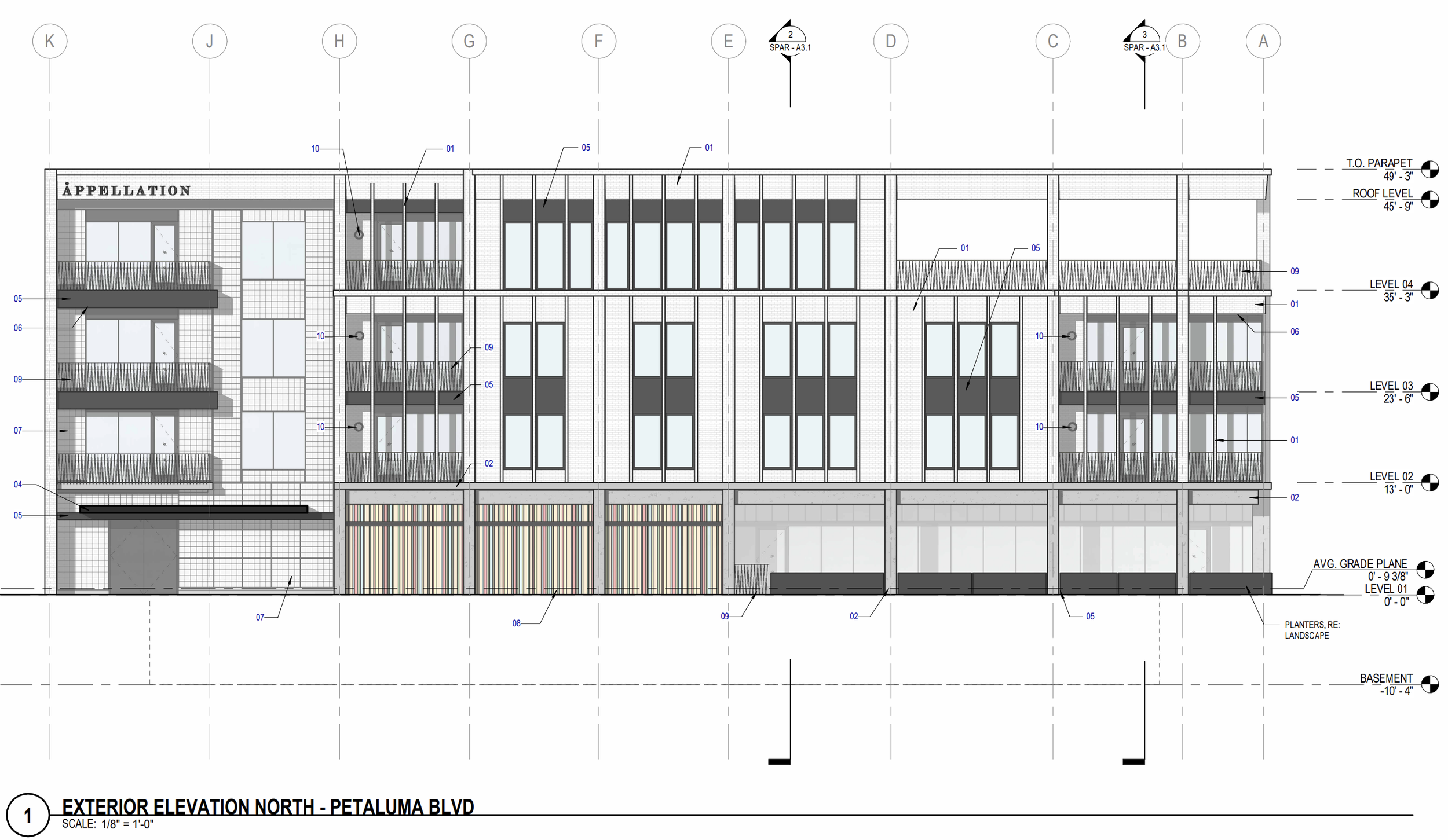
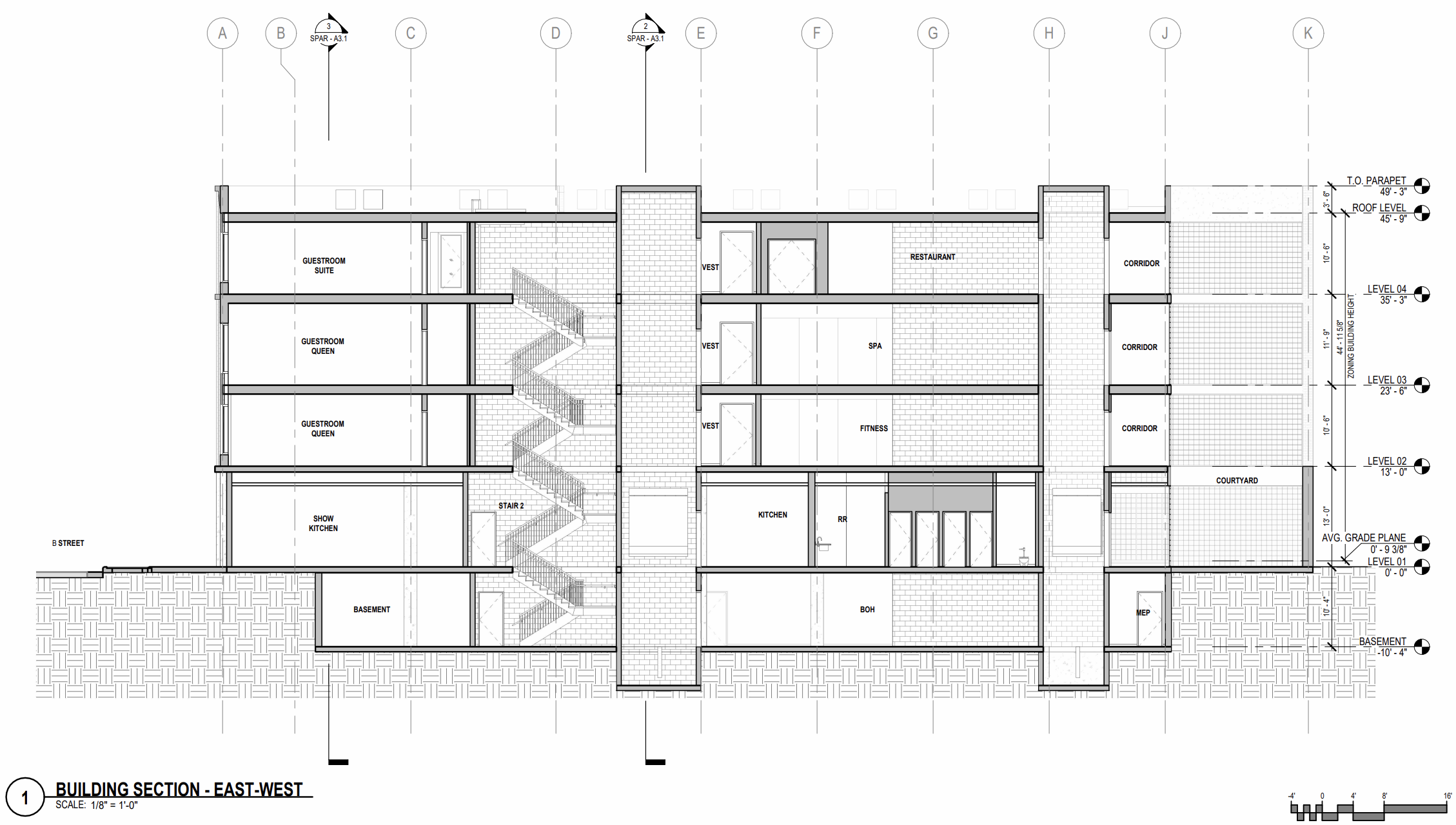
The Appellation Hotel project has advanced with a revised proposal for a four-story, 56-room boutique hotel at 2 Petaluma Boulevard South, retaining the hotel’s core program, brand identity, and operational commitments while reflecting a reduction in overall scale. This reduction was not undertaken lightly. It represents a compromise between the developer and the City of Petaluma in response to sustained opposition from a small but highly organized group, the Petaluma Historic Advocates (PHA).
While the revised project is smaller than the original proposal described on this website, it continues to deliver the defining elements of the Appellation Hotel concept: a high-quality boutique hotel, destination dining, professional valet operations, and a fully activated downtown site. However, the reduced size necessarily means fewer hotel rooms, less economic activity, and a measurable long-term reduction in annual tax revenue including Transient Occupancy Tax (TOT), sales tax, and related economic multipliers over the coming decades. This is a significant loss to the citizens of Petaluma.
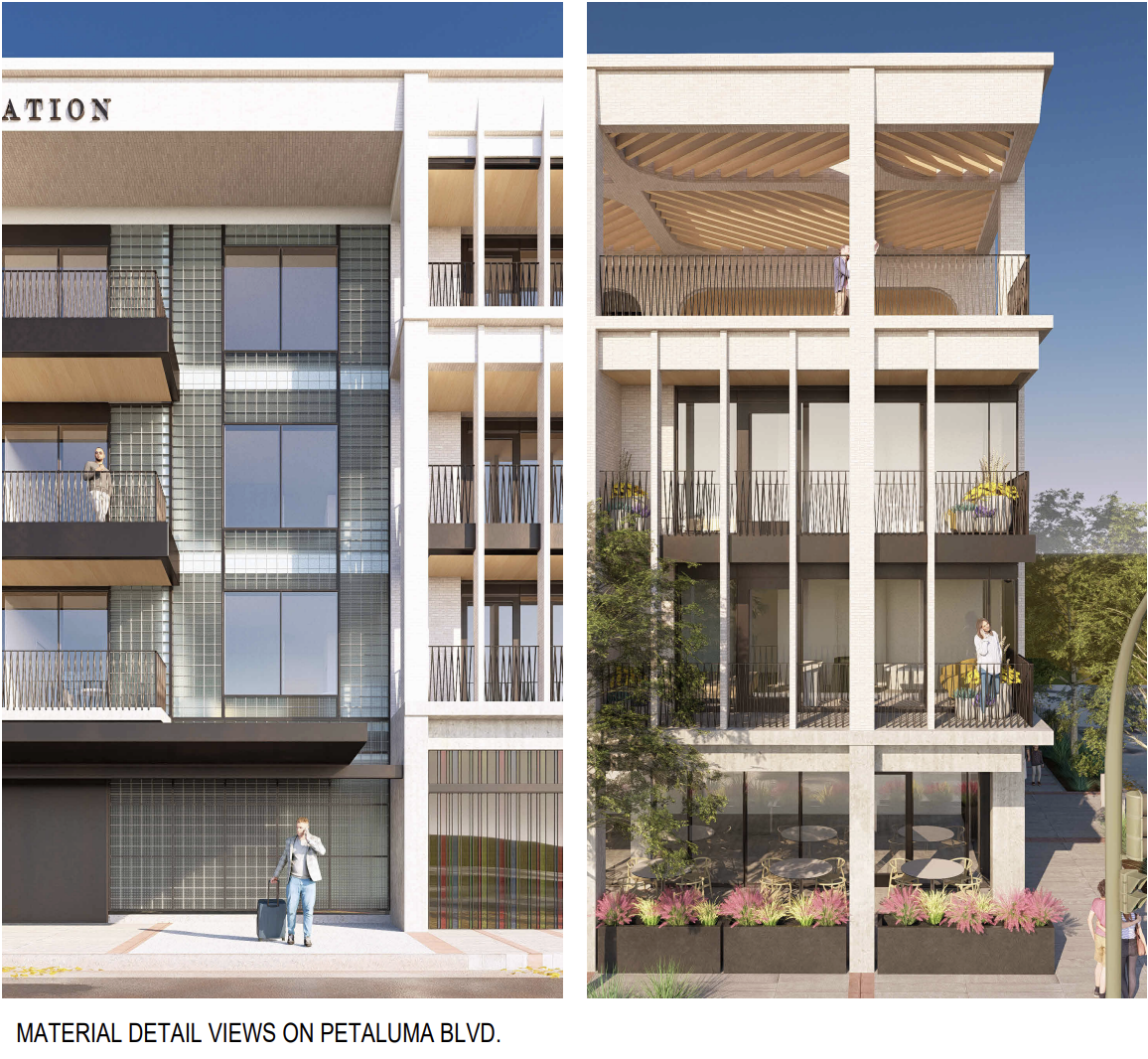
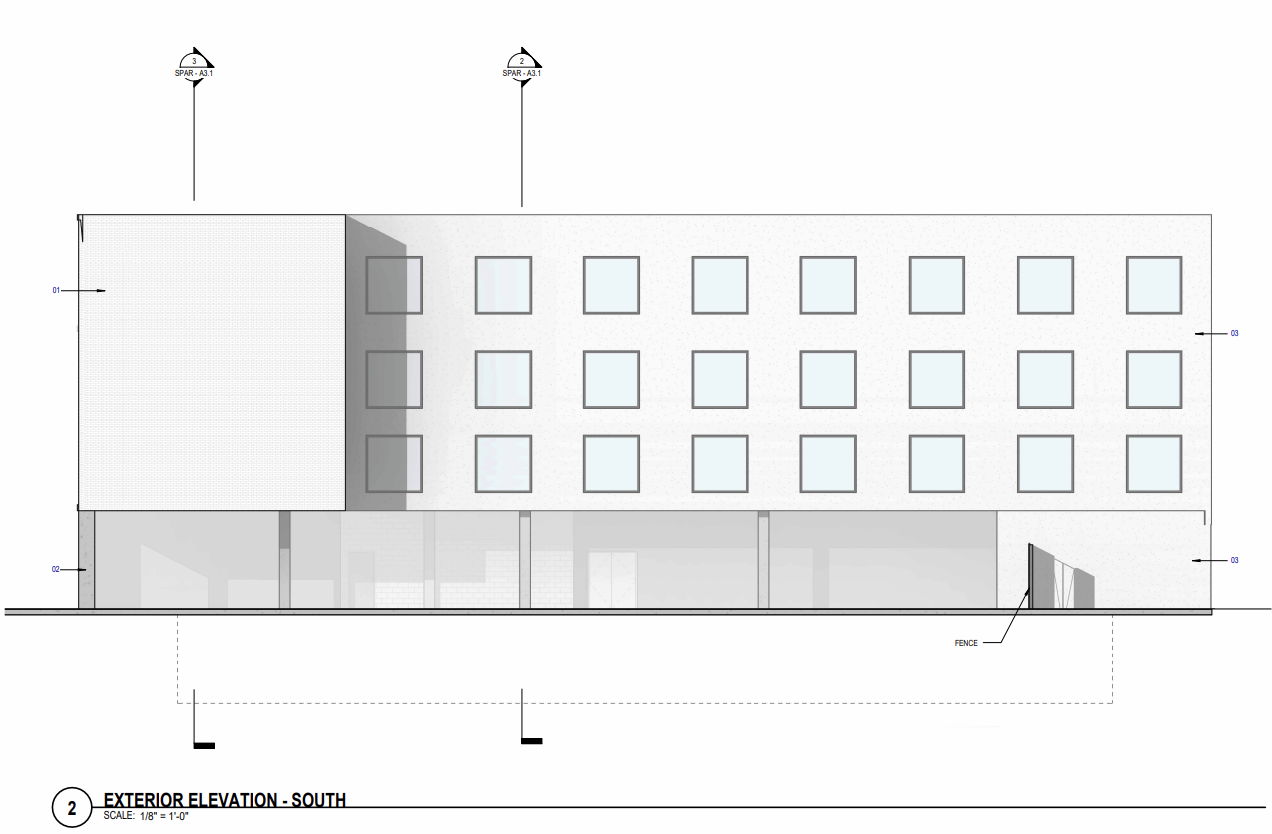
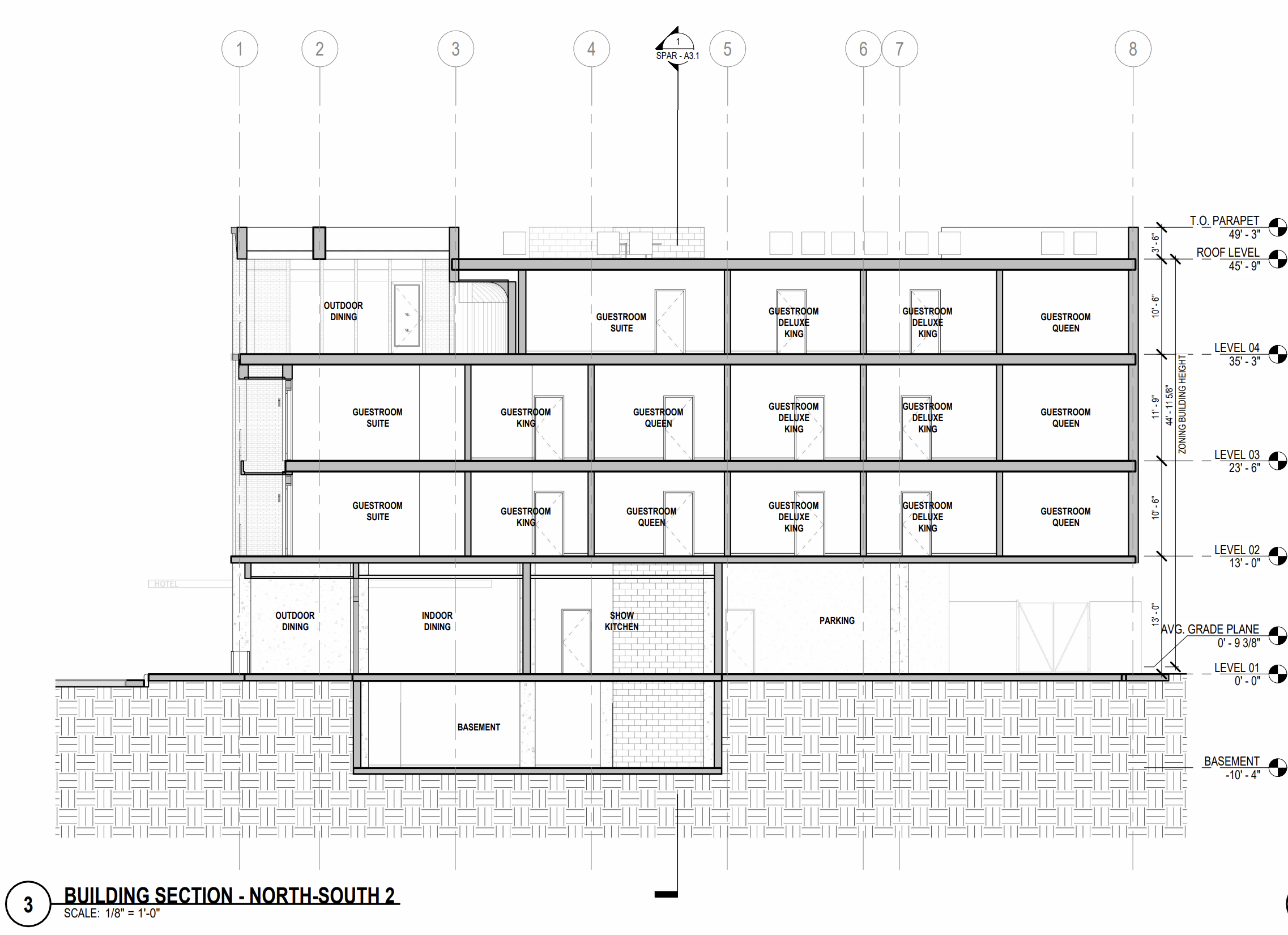
The revised hotel will include 56 guest rooms across four floors above a partial subterranean basement. The project will feature two full-service restaurants, one on the ground floor and one on the rooftop level, together offering more than 200 seats across interior and exterior dining areas. A concealed 1920s-style speakeasy will operate beneath the ground-floor restaurant, reinforcing the hotel’s hospitality and culinary identity. Both restaurants will operate seven days a week with full bar service, consistent with the hotel’s original vision. The perceived height from street level in the revised design remains at 45 feet, the exact same perceived height as the original proposal.
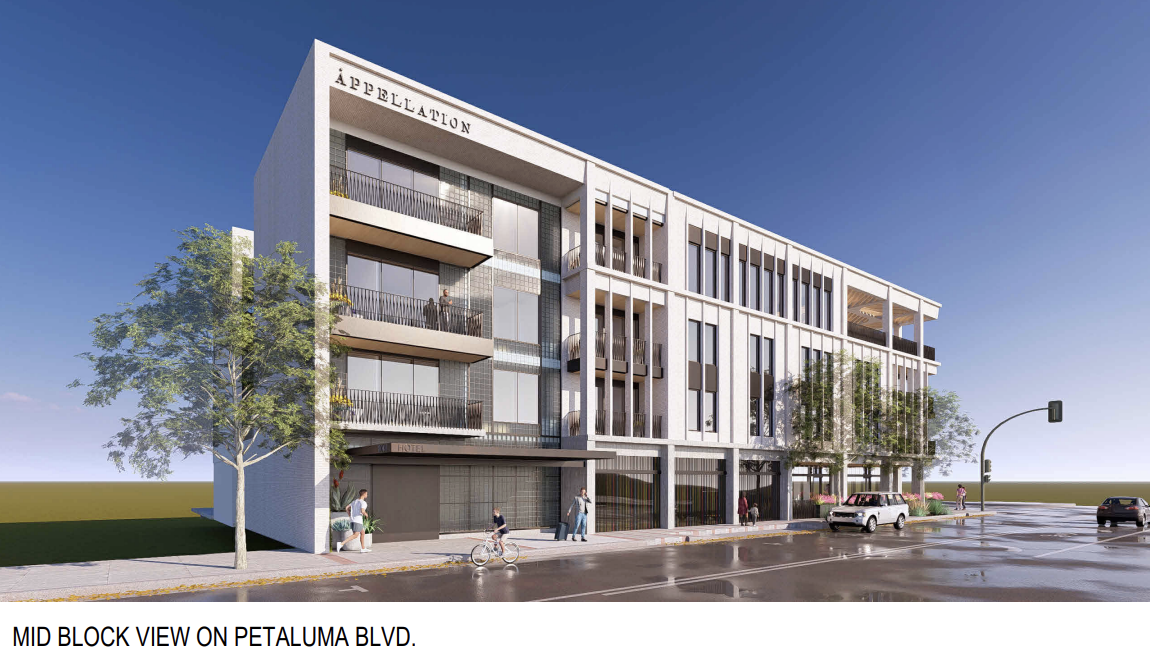
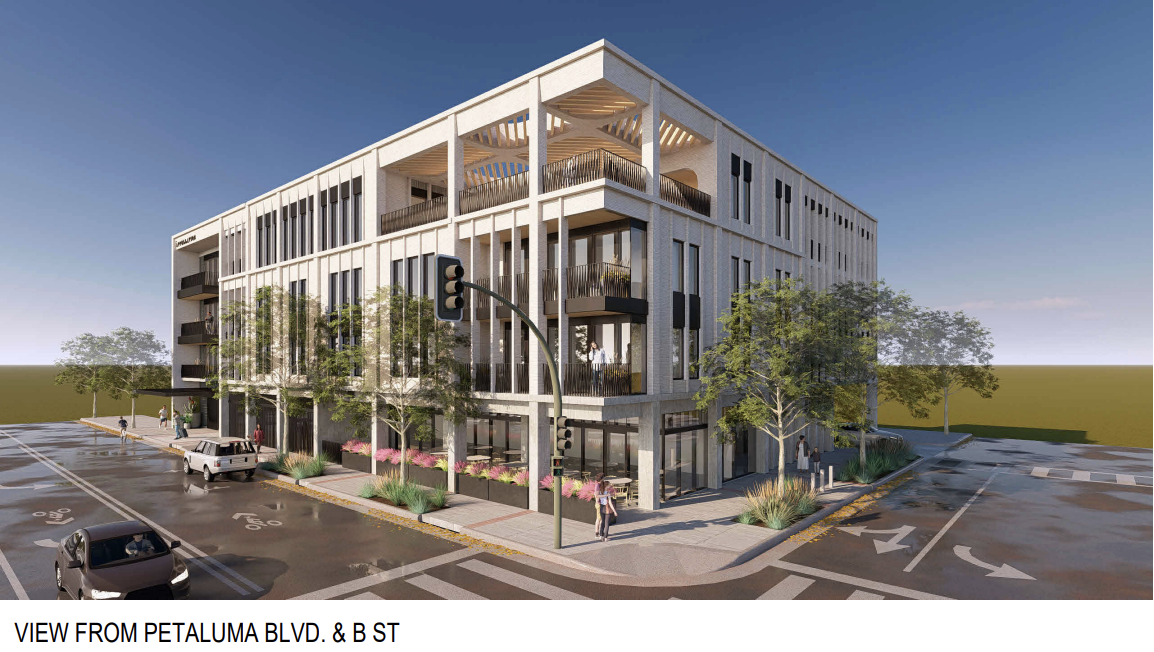
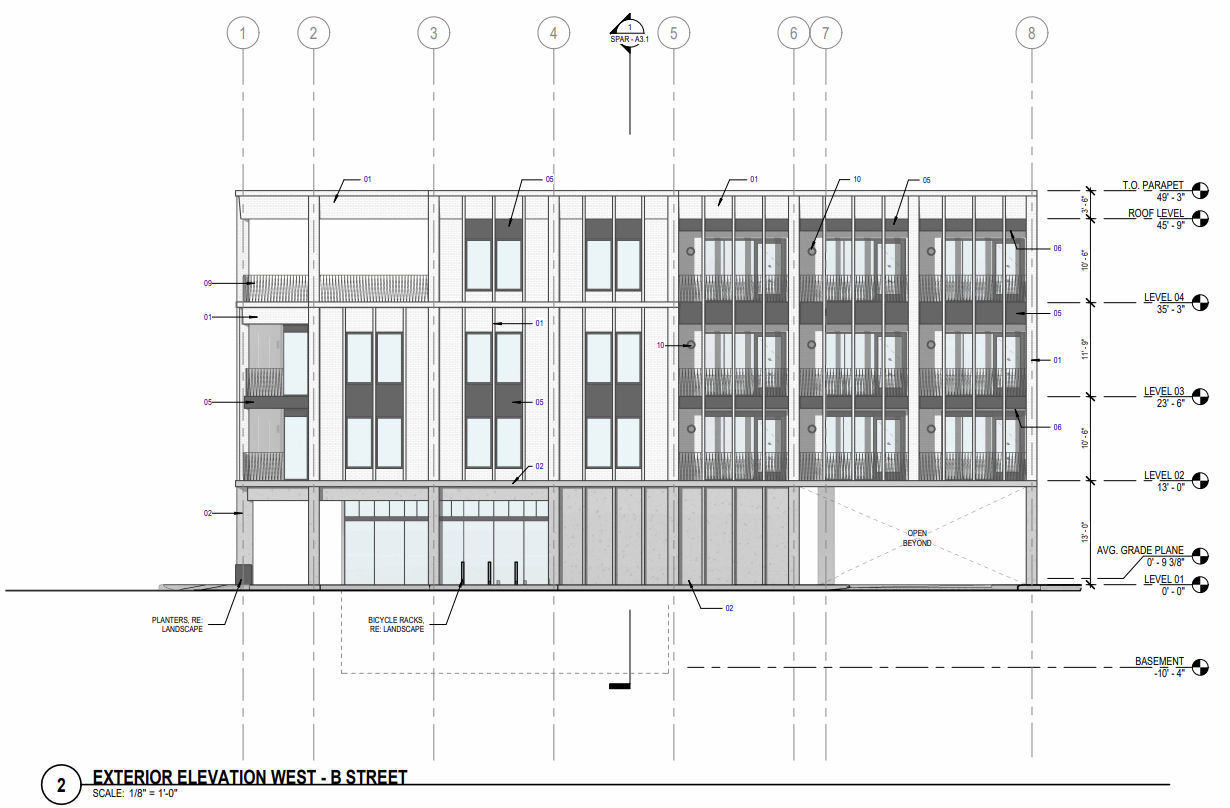
Parking will remain valet-only, with a limited number of on-site stalls supplemented by off-site parking facilities. A detailed 24/7 valet operations plan governs staffing levels, vehicle circulation, peak-hour management, and off-site routing to minimize curbside congestion and traffic impacts. Deliveries will occur via a rear loading berth accessed from B Street and scheduled during non-peak hours.
Operationally, the hotel will employ approximately 80 workers per day once stabilized across hotel, restaurant, and valet operations. Mechanical systems, odor mitigation, and noise controls are designed to meet or exceed applicable city standards.
While PHA has publicly approved the new proposal, it is important to note that the project’s downsizing should not be interpreted as a directive from Petaluma’s electorate. While PHA successfully gathered enough signatures of registered voters to qualify a ballot initiative (6,936), those signatures represent only a small fraction of the approximate 57,265 Petaluma registered voters (≈12.1%) and do not constitute a citywide vote or a mandate regarding either the original or revised Appellation Petaluma Hotel or the Zoning Overlay that would have enabled it. The revised proposal reflects a pragmatic decision to move forward under constrained political conditions, not a repudiation of the original project’s merits or value to the Petaluma community.
This smaller Appellation Petaluma Hotel will still activate a long-vacant and underutilized site, create jobs, and contribute to downtown vitality. At the same time, the community should clearly understand the tradeoff: a permanent reduction in economic benefits to the people of Petaluma compared to what was likely to come from the original, larger hotel.
Hotel News
February 11, 2025
Meet the 2026 ALIS Awards Finalists
Let’s stop calling the Appellation Petaluma Hotel “just another hotel.”
The American Lodging Investment Summit (ALIS) is the most influential hotel investment conference in the Americas. It is where global brands, institutional investors, developers, and lenders evaluate which projects are shaping markets and attracting serious capital. When ALIS names a finalist for its “Development of the Year (Full Service)” award, it is recognizing a project that redefines a destination — not routine lodging additions.
For the ALIS 2026 awards, Appellation Healdsburg Hotel was named a finalist in that category alongside two other developments — a $1.3 billion Gaylord resort and convention center in Southern California and a Ritz-Carlton Reserve in Costa Rica. Those three projects represent scale, ambition, and long-term economic positioning. Appellation Healdsburg Hotel was placed in that company because industry leaders see its model — culinary-driven, full-service, experience-focused hospitality — as transformative for the markets it enters.
The proposed Appellation Petaluma Hotel comes from that same nationally recognized platform under the inspirational guidance of renowned chef and hospitality leader, Charlie Palmer. Appellation Petaluma reflects the same destination-oriented strategy and the same investment thesis: that thoughtfully designed hospitality can elevate a region’s brand, attract high-value visitors, and increase spending in local restaurants, shops, and cultural venues.
We can debate architecture. We can debate traffic. We can debate aesthetics. But what we should not debate is whether this is a small or ordinary undertaking. It is not. The hospitality industry itself has already signaled the scale of the concept behind it.
Communities that underestimate projects like this often do so because they measure them only by room count or building height. Investors measure them by market impact. A development associated with an ALIS finalist brand is designed to compete regionally and nationally, not merely fill beds.
Petaluma should approach the Appellation Petaluma Hotel with clear eyes. Whether one ultimately supports or opposes it, minimizing its significance does not make it smaller. It only obscures the reality that this is a project intended to reshape how our city is positioned in the North Bay’s hospitality landscape.