

Renaissance Petaluma Advocacy
Catalyst Project:
Appellation Hotel
A project that benefits our entire community
The proposed Appellation Petaluma Hotel represents the kind of thoughtful investment our coalition supports—a project that could generate significant economic benefits while respecting Petaluma's historic character and meeting rigorous community standards.
◼︎ Click here to join Renaissance Petaluma and help shape Petaluma's future.
◼︎ Click here to join Renaissance Petaluma and help shape Petaluma's future.
Deep Dive: Getting the Facts Straight
When major local initiatives like the Zoning Overlay and the Appellation Petaluma Hotel come before the public, they often spark strong emotions and spirited debate. That’s healthy in a democracy — but it can also create an information problem. Complex projects are easy to mischaracterize, and in the noise of competing narratives, essential facts can be lost, distorted, or deliberately omitted. Residents who care deeply about Petaluma’s future are often left trying to sort through conflicting claims, uncertain about what’s true and what’s spin.
Renaissance Petaluma supports the Appellation Petaluma Hotel because we believe it will strengthen the local economy, create meaningful jobs, and revitalize a long-dormant site — all in keeping with Petaluma’s values and vision. But we also believe that advocacy must rest on a solid foundation of fact. The following Frequently Asked Questions and Myth vs. Fact sections are offered in that spirit: to present clear, documented information from reliable sources, to correct common misconceptions, misrepresentations, and to help Petaluma residents understand the full picture. An informed community makes better choices, and Petaluma deserves nothing less.
Comparing Perceived Heights:
Petaluma Boulevard
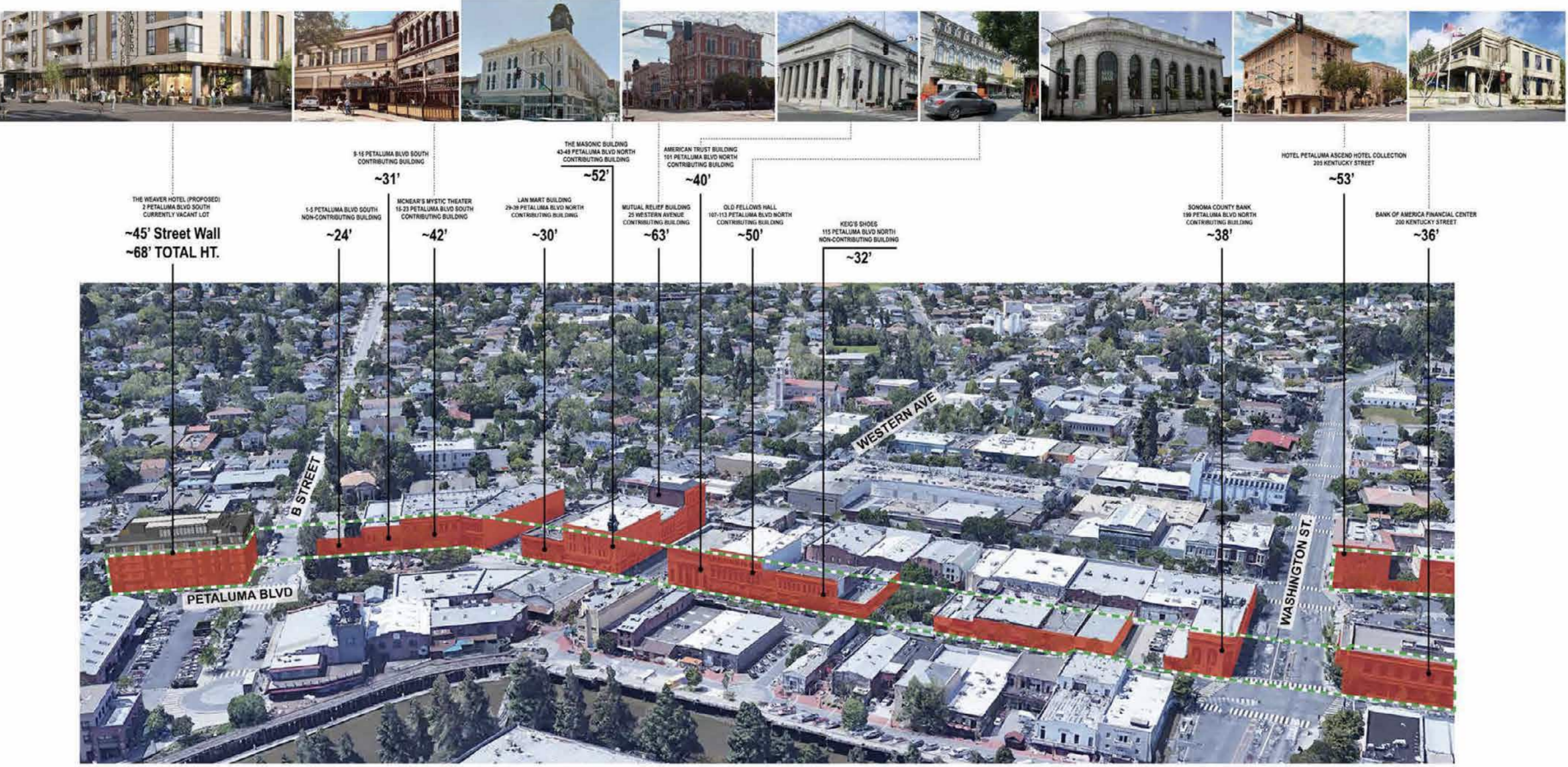
In the image above, the red band bordered with a yellow and green dotted line is the perceived hight from the sidewalk of the downtown buildings on Petaluma Boulevard and adjacent streets. The proposed Appellation Petaluma Hotel is on the far left and the old Bank of America Building on the far right. Also on the far right behind the bank is the Hotel Petaluma on the corner of Kentucky and Washington Street, built by the citizens of Petaluma in 1922-23 with a perceived height of 53 feet.
We also see the Odd Fellows Hall (50 feet), the Mutual Relief Building at the corner of Western and Kentucky (63 feet), and the Masonic Building (52 feet, with the clock tower, 72 feet). The perceived height of all four of these cherished buildings exceed the perceived height of the Appellation Petaluma Hotel at 45 feet. The perceived height of the proposed hotel is nearly the same as the perceived height of McNear’s Mystic Theater (42 feet), and the American Trust Building (40 feet).
Comparing Perceived Heights:
Kentucky Street
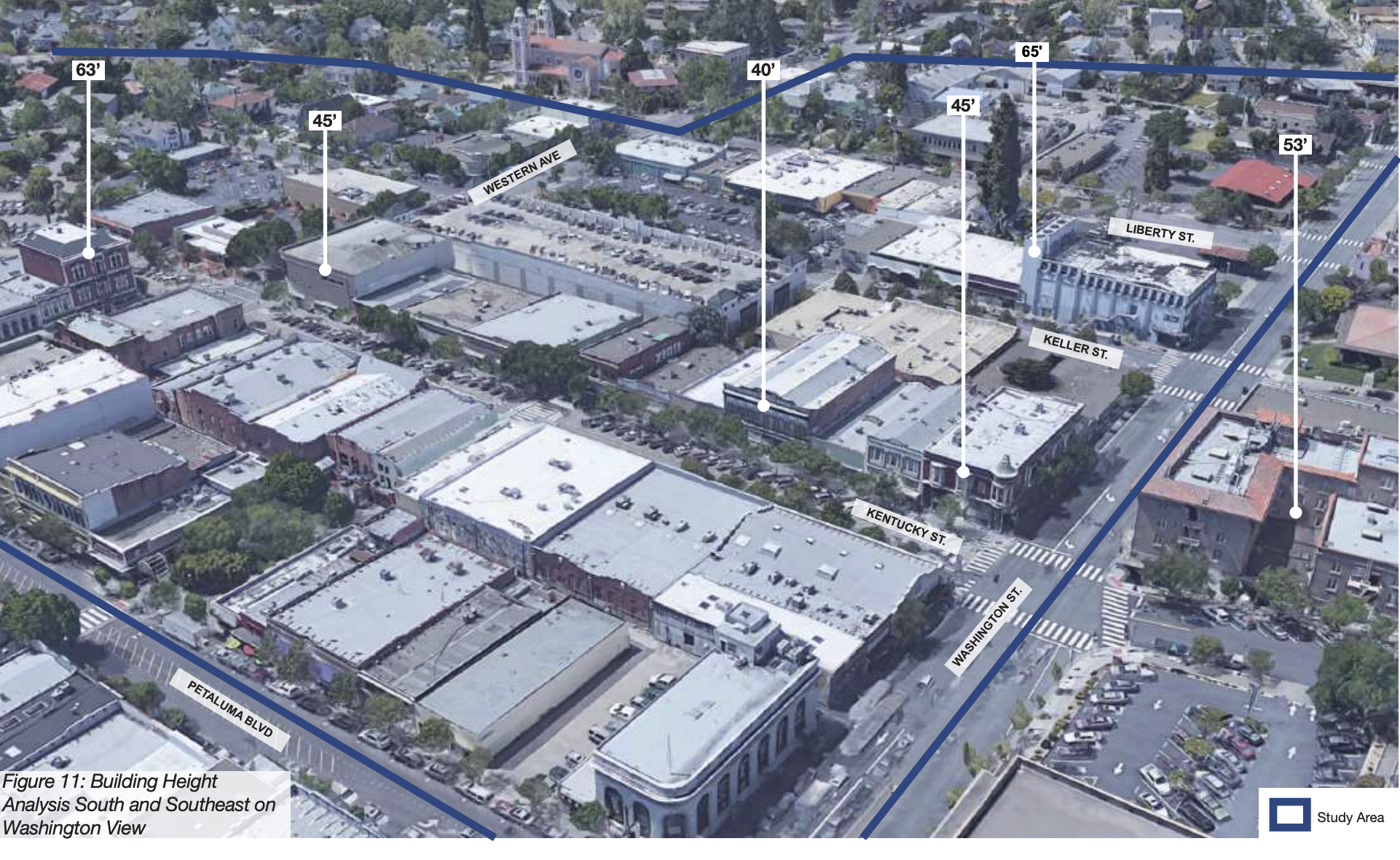
Going further west to Kentucky and Keller streets, we see the same sort of comparative height ratios that we saw on Petaluma Boulevard with five out of six buildings noted having perceived heights taller than the proposed Appellation Petaluma Hotel at 45 feet. Amy Kitchen comes in at the same height as the Hotel as does the building on the corner opposite the Hotel Petaluma .The only remaining building identified by height in the image on Kentucky is within 5 feet of the Hotel.
The Appellation Petaluma Hotel will be far from “out of scale and out of character with the historic downtown that Petalumans love and cherish” as charged by the Petaluma Historic Advocates on its website.
FAQ
-
The Appellation Petaluma Hotel is part of the Downtown Housing & Economic Opportunity Overlay, an amendment to zoning rules that let the project exceed limits on height, floor area ratio (FAR), and lot coverage. This Overlay allows denser development while ensuring projects still undergo rigorous review. The City still applies strict design criteria and requires community benefits such as enhanced streetscapes, public open spaces, and historic preservation. The goal is to allow for denser or taller development only when it meaningfully gives back to the community.
The hotel's design—with recessed upper floors that help visually mitigate the height increase, making it feel more compatible with the existing streetscape. The upper floors recess will be 25 feet from the street wall on Petaluma Boulevard, and 30 feet on “B” street.
Appellation Petaluma Hotel is being positioned among California’s first experiential boutique hotels, introducing a hospitality model where culinary immersion and local culture are core—not peripheral—elements. That’s a marked departure from the traditional luxury hotel experience.
Appellation Petaluma Hotel describes itself as more than a high-end hotel—it’s meant to be a cultural anchor in downtown Petaluma, weaving hospitality, food, art, and local identity into one destination. It offers a new niche among luxury hotels: one that values authentic place-based storytelling over generic opulence.
-
The Appellation Hotel will bring new jobs, visitor spending, and tax revenue to Petaluma, boosting local shops, restaurants, and downtown businesses. It turns a long-vacant eyesore of a site into an economic engine that supports the entire community. Mayor Kevin McDonnell and other project champions argue the hotel will create meaningful jobs, tourism, and tax revenue, delivering ripple benefits for surrounding small businesses.
Summary:
During Construction:
— The project will generate over 300 construction-related jobs, spanning trades like building, design, engineering, and specialized subcontracting.
— Millions of dollars in local contracting, materials, and professional services will circulate in the Petaluma and Sonoma County economy during the build-out phase.
— Temporary increases in local sales tax revenues from construction purchases.
During Operation:
— $1 million annually in Transient Occupancy Tax (TOT)—fully retained by the city to fund services and infrastructure.
— $18.6 million in annual economic activity, with over 150 permanent hospitality-sector jobs.
— Projected 25-year contributions:
$37.1 million in TOT,
$3.5 million in sales tax
$24.9 million in property tax.
— A strategic economic stimulus expected to spur 2% growth across 15 local industries, especially restaurants and retail.
— Additional modeling suggests $55 million in economic activity and as many as 328 jobs (including 222 annually) from the overlay and hotel combined.
-
Yes. The project is expected to contribute about $1 million annually in Transient Occupancy Tax (TOT) to the city’s general fund — money that supports local services such as public safety, infrastructure, parks, and cultural programs. Over 25 years, total city revenue from TOT, property, and sales taxes could exceed $98 million, providing a reliable source of funding that benefits all residents.
-
Yes. The project underwent full review under the California Environmental Quality Act (CEQA), including mitigation measures and a Environmental Impact Report (EIR).
The city determined that, with these measures in place, the project will not cause significant environmental harm. The review process also confirmed that the site contains no existing historic structures, and the design standards ensure new construction harmonizes with the surrounding historic district.
-
The Petaluma Historic Advocates argue that the hotel’s scale and modern aesthetic clash with Petaluma’s small-town character and historic fabric. They worry it will alter the pedestrian-friendly downtown environment, affect local businesses via increased traffic and parking pressure, and cater more to visitors than residents. Renaissance Petaluma responds to these concerns here in the FAQ as well as in Myth vs. Fact below and in the sections on Fiscal Impacts, Employment Impacts, Impacts on the Built Environment, and Cultural/Social Impacts.
-
Yes. Prominent voices—including developers, city officials, and more than 50 downtown business owners—have framed the Appellation Petaluma Hotel not just as a building, but as an investment in Petaluma’s downtown vitality. They emphasize that thoughtful development could spark economic renewal. In fact, local businesses see the denial through a ballot measure of both the Zoning Overlay and the Appellation Petaluma Hotel as a precedent-setting event signaling a slow down in Petaluma's downtown economic development well into the future.
-
Absolutely. The City held more than two years of public hearings, workshops, and study sessions involving the Planning Commission, Historic and Cultural Preservation Committee, and City Council. Residents were invited to comment through public meetings, written submissions, and the Environmental Impact Report (EIR) process.
The citizens of Petaluma were engaged formally through public study sessions, hearings, scoping meetings, and public workshops as required by state and federal law. Documents such as the Draft Environmental Impact Report (DEIR), project updates, and opportunities to engage—via in-person hearings, emails, or mailed comments—were made available and publicized.
The project followed a clear California Environmental Quality Act (CEQA) pathway as required by law. Opportunities were avalable for the public to comment on the Draft Environmental Impact Report (DEIR) and the Final Environmental Impact Report (FEIR) as well as other structured opportunities for public input. Between the Planning Commission, the Historic and Cultural Preservation Committee (HCPC), and City Council, public sentiment and expert feedback were received and incorporated at each level of the process. As one might reasonably expected in processes such as these, not every suggestion expressed by diverse voices became part of the final determination by the City Council.
Public Involvement Timeline
Overview
Initial Development (Apr–Nov 2023):
Public study sessions, consultant input, KnowB4YouGrow community meeting, and a joint Planning Commission / Historic & Cultural Preservation Committee (HCPC) hearing.Environmental Review (Aug–Oct 2024):
Draft Environmental Impact Report (DEIR) released; public comment period held; joint DEIR hearing with Planning Commission and HCPC.City Council Hearings (Oct 2024–Apr 2025):
Multiple formal hearings culminating in certification of the Final EIR (FEIR) and adoption of the Downtown Building Form Zoning Overlay in reduced form (Subarea A only).
Detailed Timeline
Downtown Building: Zoning Overlay
April 2023: Overlay development initiated.
June 2023: Consultant report released — “Petaluma Building Form Overlay in Downtown.”
June 13, 2023: Joint Planning Commission + Historic & Cultural Preservation Committee (HCPC) study session.
July 12, 2023:KnowB4YouGrow public meeting.
August 8, 2023: Planning Commission study session.
October 3, 2023: Historic & Cultural Preservation Committee (HCPC) study session.
November 14, 2023: Joint Public Hearing of the Planning Commission and HCPC — formal staff and public comments received.
September 24, 2024: Joint Planning Commission + Historic & Cultural Preservation Committee (HCPC) hearing on the Draft Environmental Impact Report (DEIR).
Received staff, agency, and public input.
Recommended City Council proceed with preparation of the Final EIR (FEIR), incorporating HCPC recommendations.
Appellation Petaluma Hotel & Overlay Joint Review
May 1, 2024: Public scoping meeting held to initiate CEQA environmental review.
August 26, 2024: DEIR released for public review.
September 24, 2024: Joint Planning Commission + HCPC hearing on the DEIR.
October 21, 2024: DEIR public comment period closed.
City Council Review and Final Actions
October 7, 2024: Initial City Council hearing.
February 14, 2025: Public notice issued — invited written and in-person comments on the Final EIR and Overlay adoption.
February 24, 2025:
City Council hearing on the Final Environmental Impact Report (FEIR).
FEIR certified by Resolution 2025-021, adopting CEQA Findings of Fact and Statement of Overriding Considerations.
April 21, 2025:
Final City Council hearing.
Adopted the Downtown Building Form Zoning Overlay in reduced form (Subarea A only).
CEQA Documentation Summary
DEIR — Draft Environmental Impact Report for the Downtown Building Form Zoning Overlay and Appellation Petaluma Hotel Project (released August 26, 2024).
FEIR — Final Environmental Impact Report (certified February 24, 2025).
The City Council ultimately approved the Zoning Overlay and the Appellation Petaluma Hotel following this full, transparent review — reflecting both public feedback and expert recommendations.
-
No. Preserving Petaluma’s historic identity is central to the Zoning Overlay. New projects must meet strict design standards and undergo historic review. The preliminary design of the Appellation Petaluma Hotel has recessed upper floors and a scale that blends with downtown, while investing in public amenities and streetscape improvements.
Here in Petaluma, we already celebrate our tall, dramatic downtown buildings that shout “1885” and “1925.” They weren’t seen as historic when they were built—they were bold and new and reflected the ambitions of Petaluma. Today, we stand in a moment when we can shape the next chapter—it’s time to welcome a building or two of quality that confidently say “2025.”
The Petaluma Historic Advocates claim that the Appellation Petaluma Hotel will be "destructive to the fabric of Petaluma’s Historic Downtown District". The history of our historic District belies this claim. From the middle of the 19th century until today, the architectural styles and permitted sizes of our cherished buildings have changed with the times, changed with the people's sensibilities and taste from:
the Masonic Hall and the Mutual Relief building (1840-1885) in Italianate style; to
the Schluckebier & Gwinn building in Second Renaissance Revival style (1885); to
the Odd Fellows Hall in Second Empire style (1855-1885); to
the Heralds Building in Queen Ann style (1880-1910); to
the LanMart Building in Mission Revival style (1890-1920); to
the Hotel Petaluma in Mediterranean Revival style (1915-1940); to
the Carithers Building (now Amy's Kitchen headquarters) in Streamline Moderne style (1920-1940).
As a result of this historical layering of styles and sizes, each generation left its architectural mark on the cumulative "fabric' of Petaluma.
The source of Petaluma's charm is its bold and eclectic nature. To see this historical layering side-by-side, a person need only stand at the intersection of Kentucky Street and Western Avenue facing the iron-front of the Mutual Relief building on the south-east corner of the intersection and then turn around to view the Streamline Moderne style of Amy's Kitchen boldly standing on the north-west corner.
The Appellation Petaluma Hotel will add another layer to this fabric—it will enrich, not damage it.
-
The city studied traffic and parking impacts as part of the Environmental Impact Report (EIR). The analysis found impacts to be manageable and offset by project improvements. The downtown location—steps from the SMART station and transit—also encourages walking and reduces reliance on cars.
The hotel includes below-grade parking and is positioned in a walkable downtown area, encouraging visitors to arrive on foot, by train, or via rideshare. Improvements to sidewalks and streetscapes will also help ease circulation and safety for pedestrians.
A recent (February 2025) preliminary downtown parking study found that parking in the general downtown area "rarely exceeds" 85% capacity, which is considered an optimal occupancy rate by urban planners. This indicates that, on average, there is generally available parking downtown. This study covers the overall downtown area, which encompasses the Theatre District Parking Garage located within two blocks of the hotel.
In addition, the Appellation Petaluma Hotel will develop plans for overflow parking and an employee shuttle program when necessary to accommodate off-site parking.
-
The Downtown Housing & Economic Opportunity Overlay gives Petaluma a way to plan growth responsibly. It encourages development in the right places — downtown — where infrastructure already exists, while protecting open space and farmland outside the City core.
The Overlay allows flexibility on height or density only when projects provide measurable community benefits, such as historic preservation, public gathering spaces, or design excellence. It’s a tool for thoughtful stewardship, not unchecked expansion.
-
No. Every project proposed under the overlay must still go through Petaluma’s full public review process — including staff analysis, Planning Commission consideration, environmental review under CEQA, and final City Council approval.
The Overlay doesn’t remove limits; it sets higher expectations. It ensures that new projects must earn approval through quality, community benefit, and compatibility with downtown’s historic character.
-
The California Environmental Quality Act (CEQA) record for the Zoning Overlay project states that the Overlay component includes proposed Subarea A, Subarea B, and Subarea C, and notes that “Portions of two of the subareas, Subarea A (three parcels) and Subarea B (one parcel), are located within the Downtown Commercial Historic District boundary.”
The same CEQA document states that the Appellation Petaluma Hotel site would be among those properties within the Overlay Subarea A, requesting relief (i.e. height, lot coverage, etc.). The City’s project web page for the Appellation Petaluma Hotel states that the overlay “covers the [hotel] project site and the adjacent blocks.”
In a May 2025 statement, under pressure from members of the Petaluma Historical Society, the City announced that the Zoning Overlay “now applies only to two downtown blocks between B St and D St” (i.e. the reduced Overlay), which includes the block where the hotel is located. In other words, only Subarea A of the original Zoning Overlay proposal remains.
-
The Appellation Petaluma Hotel is expected to increase foot traffic downtown, especially during evenings and weekends, when local restaurants, shops, and galleries most benefit. Supporters of the Appellation Petaluma Hotel view this increase in foot traffic as a vital boost for the local economy and downtown culture. More visitors walking the historic streets mean more people dining in locally owned restaurants, browsing independent shops, and attending community events.
Rather than detracting from the neighborhood, this added activity can strengthen the small businesses that give downtown its unique character and help ensure their long-term success. Foot traffic also fosters a sense of vibrancy and safety, as lively sidewalks encourage greater use of public spaces and enhance the experience for residents and visitors alike. In this way, the Appellation Petaluma Hotel is seen not as a threat to Petaluma’s charm, but as a partner in keeping downtown thriving, relevant, and welcoming.
-
The project combines local leadership with experienced partners. The culinary and hospitality concept comes from Appellation Hotels, based in Healdsburg and led by renowned chef Charlie Palmer, a longtime Sonoma County resident.
The developer, EKN Development Group, is managing construction and financing but will rely on local trades, artisans, and service providers throughout the build and operation.
This partnership blends outside investment with strong regional roots — ensuring the project benefits Petaluma’s economy, workforce, and identity.
-
Yes. A referendum drive by Petaluma Historic Advocates has gathered 6,936 signatures — above the threshold required to qualify a ballot measure that could overturn the zoning changes that enable the Appellation Petaluma Hotel project. A special election or placement on the November 2026 primary ballot is being considered by the City Council.
While the Petaluma Historic Advocates have urged “let the people decide,” the residents of Petaluma have already spoken decisively in the last City Council election. In District 6, where the issue of downtown development were particularly prominent including the Overlay and the Hotel, voters favored the candidate supporting structured downtown revitalization by roughly 45% to 30%.
Across the other districts, voters similarly chose candidates aligned with thoughtful growth and housing solutions, reflecting broad community support for responsible development initiatives. The election results demonstrate that the community has already weighed these choices, providing a clear mandate for projects that balance growth, housing availability, and historic preservation.
The cost to the taxpayers of the ballot measure will be between $77,000 and $81,000 if the measure is on the November 2026 primary ballot. If the determinations is for a special election, the cost to the taxpayers will be between $150,000 and $360,000.
Data Sources:
Sonoma County Registrar of Voters — Election Costs (expenditures and reimbursement tables)
California County election cost methodology (per jurisdiction / per registered voter)
California Secretary of State — Referendum process and ballot timing guidance.
-
No, but affordable housing can fulfill its public purpose across a variety of sites downtown or near downtown. But a luxury hotel cannot. The Appellation Petaluma Hotel’s economic engine depends on being located exactly where visitors want to stay — downtown, walkable, and on the edge of Petaluma’s historic district. To maximize public good, the hotel belongs here, and affordable housing can, and should be strategically sited elsewhere.
At a realistic average daily occupancy rate of $450, the proposed Appellation Petaluma would generate more than $1 million every year in Transit Occupancy Tax (TOT), making it one of the single strongest revenue-producing parcels in the entire city.
Replacing that with affordable housing produces no TOT and a much smaller fiscal contribution — while affordable units can be built on many alternative sites that do not carry such a steep opportunity cost.
Replacing the Appellation Petaluma Hotel with affordable housing produces an annual loss of approximately $1,000,000 a year in TOT — while affordable units can be built on many alternative sites.
Urban economics tell us that when a city has limited infill land near its core, the parcels with the highest potential revenue generation should go to the highest-value uses.
-
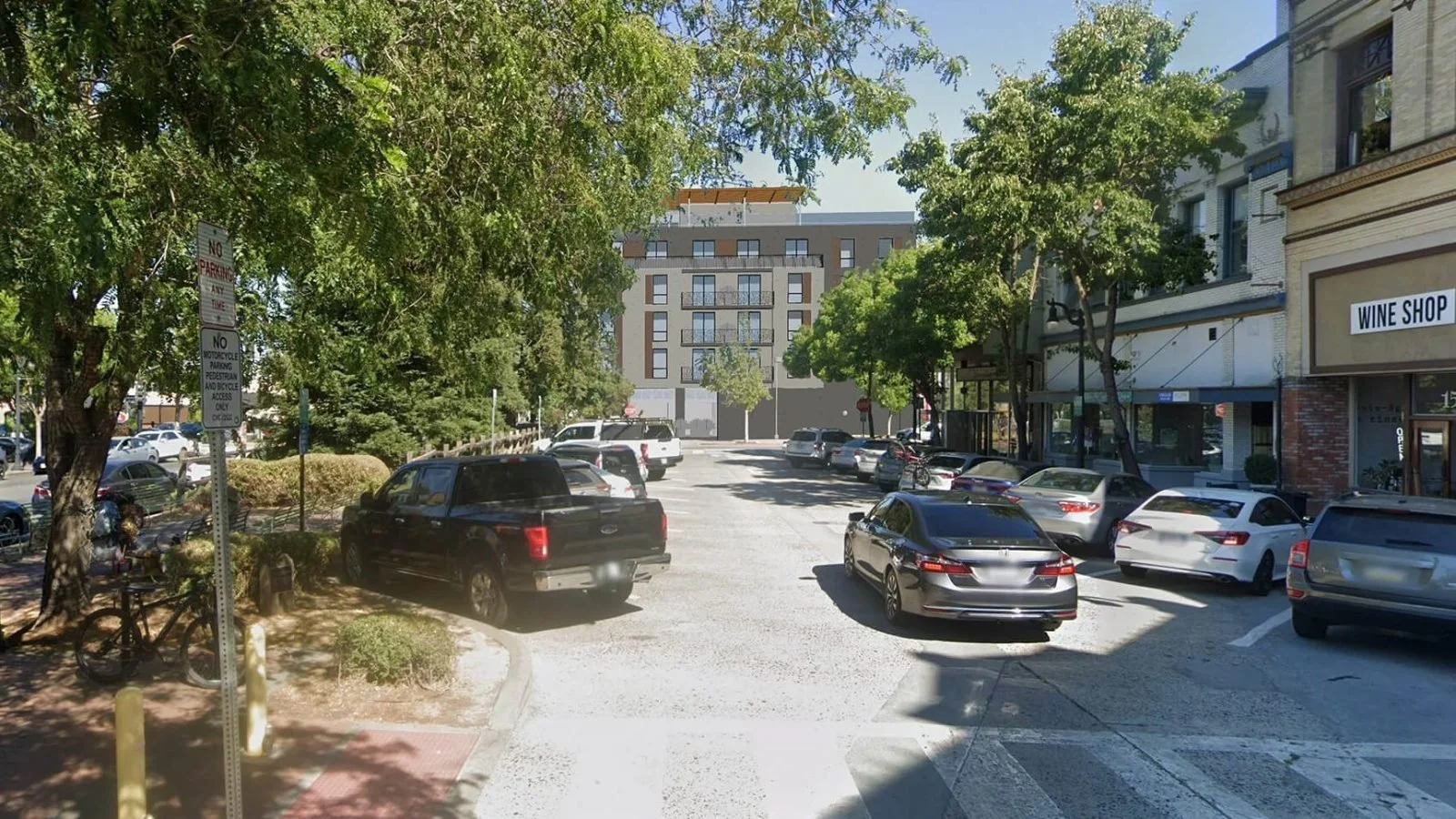
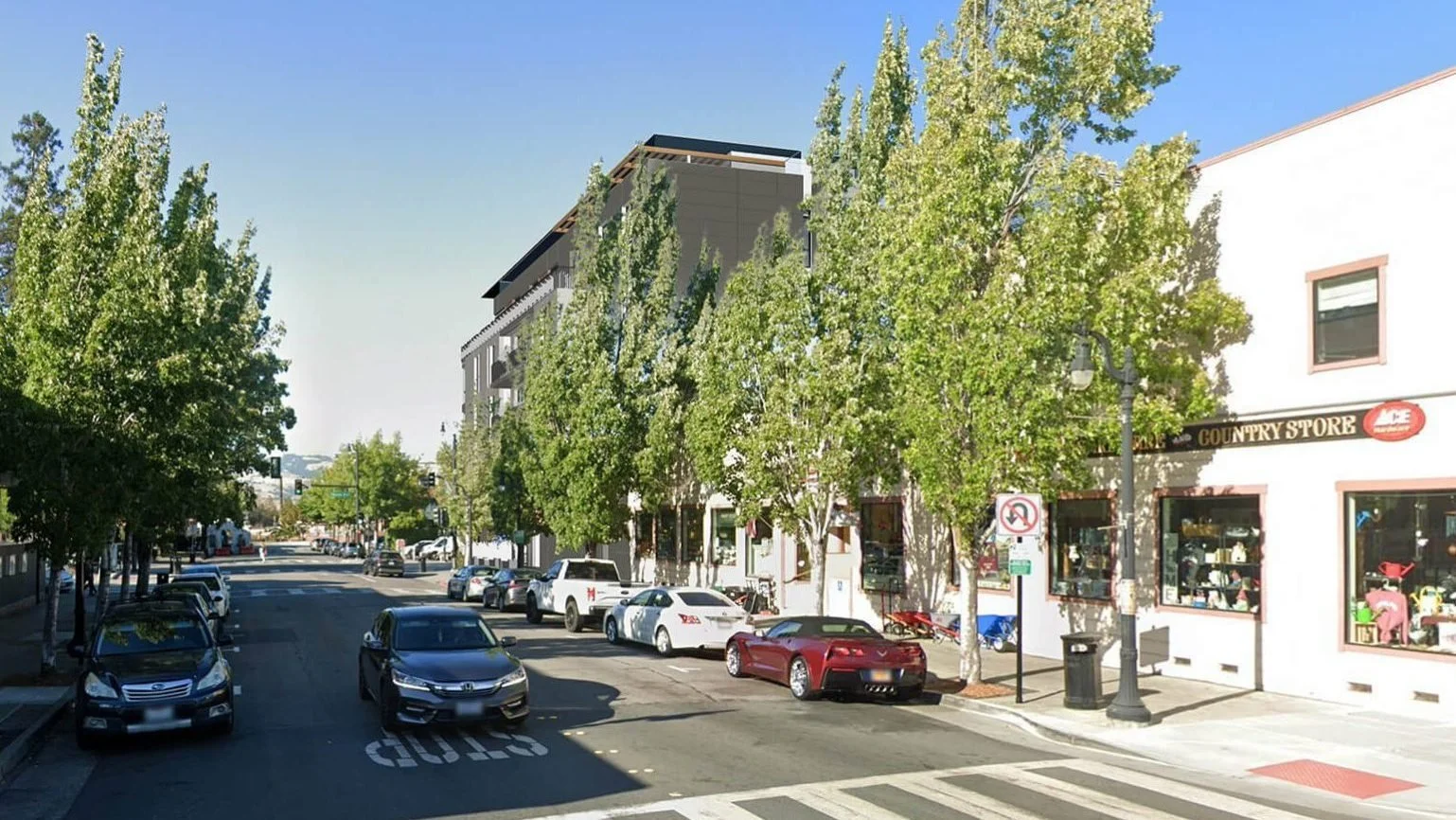
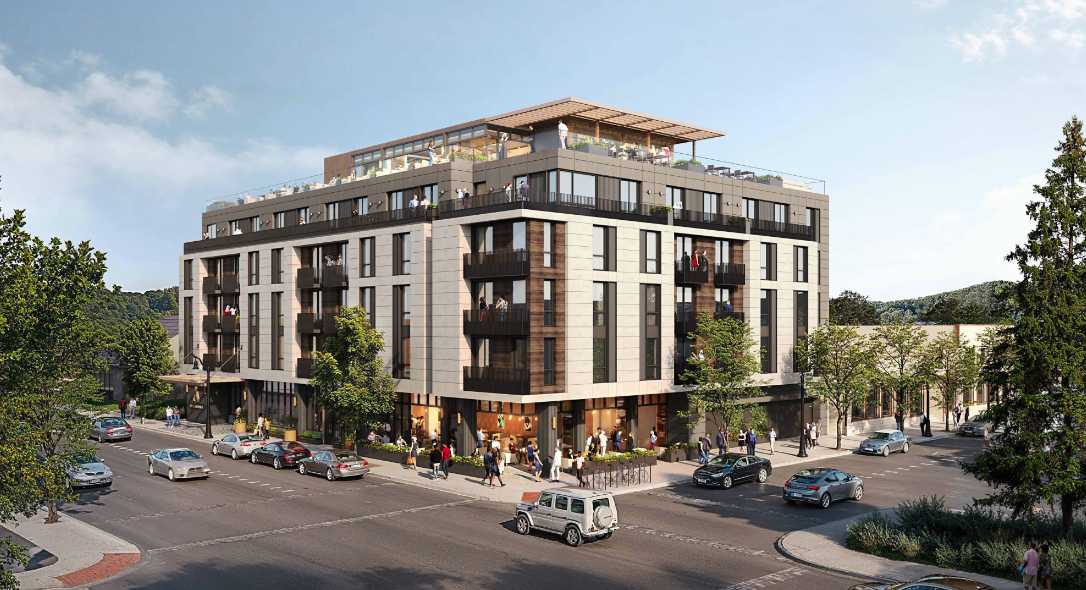
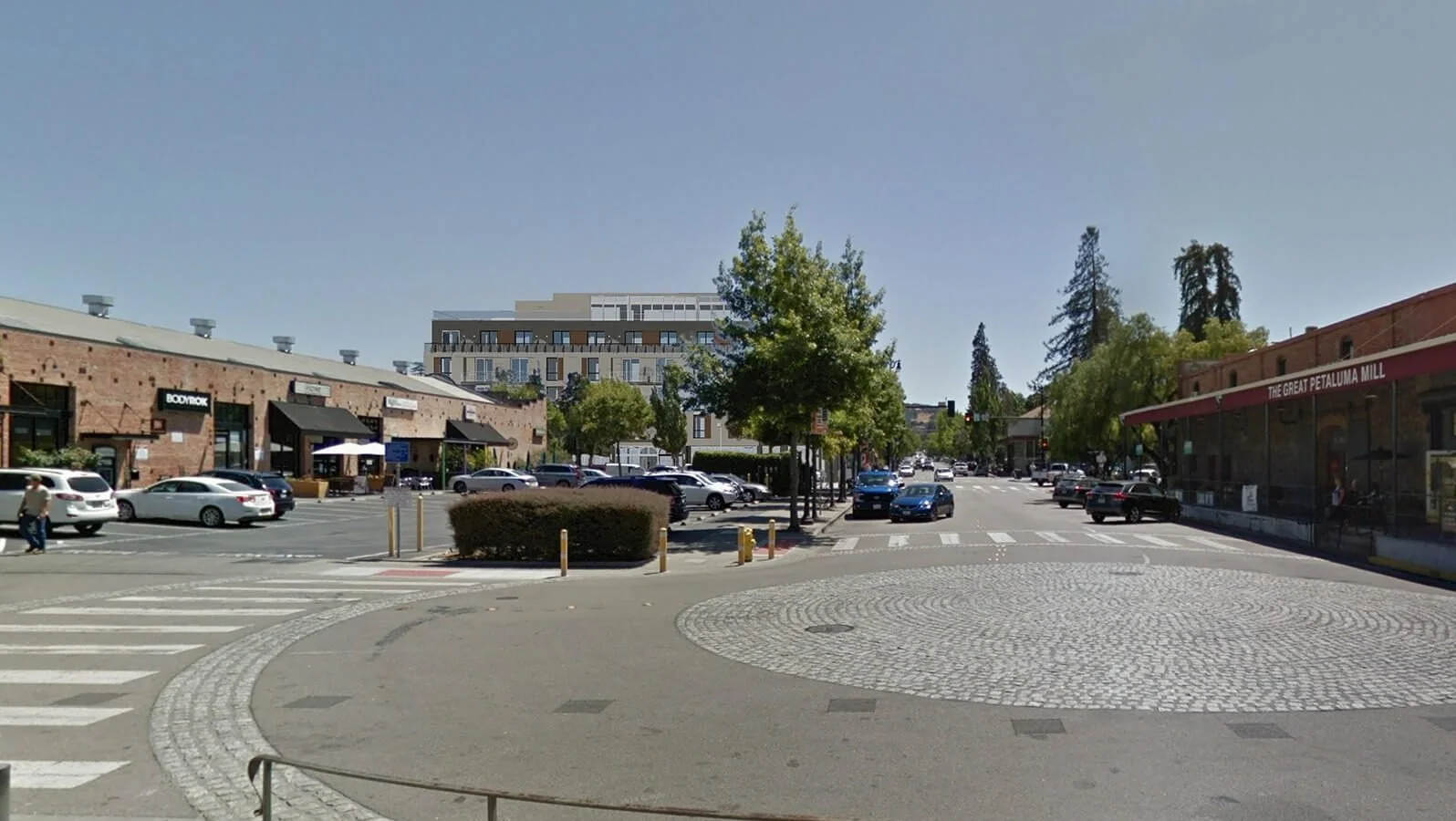
The physical height of the Appellation Petaluma Hotel is its full measured height—from the ground to the top of the sixth floor. But what people actually see at street level is very different. Perceived height refers to how tall a building appears to pedestrians and neighbors based on sight lines, façade design, and setbacks.
In this case, although the Hotel has six stories, only the first four rise directly from the sidewalk to a 45-foot street wall. The top two stories are recessed significantly behind that wall. Because of these upper-story setbacks, normal sight lines from the sidewalk—and even from across the street—make the fifth and sixth floors effectively invisible to the pedestrian eye. What dominates the street experience is the 45-foot frontage, which is consistent with other nearby buildings.
This is why many cities require or encourage setbacks above a certain height: they allow taller buildings without creating a dominating or out-of-scale presence at street level. The design of the Appellation Petaluma Hotel follows that same principle, offering the economic benefits of six stories while maintaining the visual feel of a much lower building when viewed from the surrounding streetscape.

Myth vs. Fact
MYTH: “The public had inadequate say in the overlay or hotel decision.”
FACT: The city held more than two years of public meetings, hearings, and workshops involving the Planning Commission, Historic and Cultural Preservation Committee, and City Council. The process included an Environmental Impact Report with public comment periods, ensuring full transparency and community input before approval.
MYTH: “The hotel will overwhelm downtown and ruin its historic character?
FACT: The hotel’s design follows strict historic district guidelines. Its top two floors are recessed 25 feet on the Boulevard and 30 feet on B Street to reduce visual impact, keeping the street-level scale in line with surrounding buildings in the same way Hotel Petaluma has for 103 years. Materials, proportions, and detailing reflect Petaluma’s architectural rhythm — contributing a respectful new chapter, not a disruption.
MYTH: “Traffic and parking will become unmanageable.”
FACT: The city’s Environmental Impact Report found that impacts are manageable and offset by design improvements, below-grade parking, and the site’s proximity to transit and walkable streets. Downtown circulation is expected to improve with streetscape upgrades and added pedestrian connectivity.
MYTH: “The Zoning Overlay opens the door to unchecked development.”
FACT: The Overlay is a carefully controlled planning tool—not a blanket approval. Every project under it must still pass through Petaluma’s normal review process, including design scrutiny, CEQA environmental review, and City Council approval. It enables flexibility only for projects that demonstrate clear community benefit and quality design.
MYTH: “This project will make Petaluma lose its small-town charm.”
FACT: Petaluma’s charm comes from its layered history — each generation adding buildings that reflect its time. From Victorian storefronts to 1920s Mission Revival to midcentury modern, change has always been part of Petaluma’s story. The Appellation Hotel continues that tradition: a building of its era that fits gracefully into the fabric of a timeless city.